The first modern Olympic Games
Pierre de Coubertin's revived Olympics opened in Athens in April 1896, with 241 athletes from 14 nations competing in the restored Panathenaic Stadium. Greek water-carrier Spyridon Louis won the first marathon and became a national hero.
See it on the globe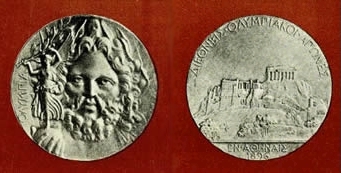
What happened
Inspired by ancient Olympia and by the English public-school cult of sport, the French educator Pierre de Coubertin founded the International Olympic Committee in 1894. Two years later the first modern Olympic Games opened in Athens on 6 April 1896, in the marble Panathenaic Stadium, restored for the occasion with money from the Greek benefactor George Averoff.

Around 241 athletes, all men, from 14 nations took part in 43 events, from athletics and gymnastics to swimming in the cold open sea at Piraeus. Many competitors were students or tourists who simply happened to be in Greece. The American James Connolly won the triple jump to become the first Olympic champion in more than 1,500 years.
The highlight for the host nation was the marathon, a new event based on the legend of a runner carrying news of victory from Marathon to Athens. It was won by Spyridon Louis, a Greek water-carrier, in front of a delirious home crowd. His victory helped make the Games a lasting success and the marathon its most symbolic race.
Around the same time
- The Eiffel Tower and the 1889 World's Fair, Paris, France, 1887 to 1889
- The San Francisco earthquake and fire, San Francisco, USA, 1906
- Krakatoa erupts, Sunda Strait, Dutch East Indies, 1883
- The Panama Canal opens, Panama Canal Zone, 1904 to 1914
Earlier: The Eiffel Tower and the 1889 World's Fair, 1887 to 1889 · Later: The Panama Canal opens, 1904 to 1914
Further reading
Encyclopedia article: 1896 Summer Olympics (en.wikipedia.org)