A collection · 6 stories · 1876 to 1930
When nature struck
Volcanoes, earthquakes, storms and droughts that destroyed cities, moved whole populations and changed how people build and plan.
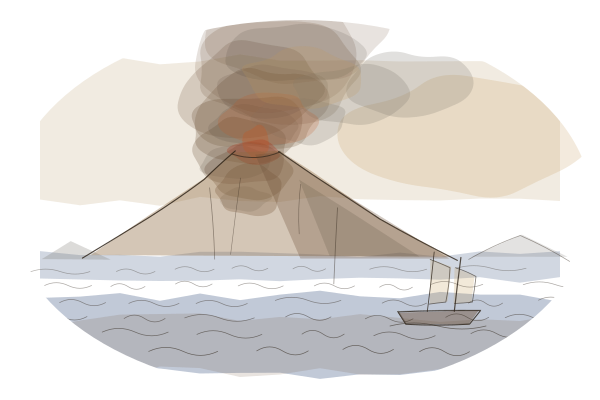
Some of the biggest turning points on the map were not decided by kings or armies. A volcano blew apart, the ground shook, the rain stopped. In a few hours or a few dry seasons, cities were lost and millions of people had to start again somewhere else.
These stories follow what happened next as much as the disaster itself: the relief efforts, the new building rules, the families who moved away, and the way news of each catastrophe travelled faster around the world each time.
The stories
- 1876
North China's great famine
Northern China
Years without rain left millions of people starving across five provinces. It was one of the deadliest droughts ever recorded, and it drew one of the first large international relief efforts.
- 1883

Krakatoa erupts
Sunda Strait, Dutch East Indies
The eruption was heard thousands of kilometres away, and its tsunamis swept the coasts of Java and Sumatra. The telegraph carried the news around the world within hours.
- 1900
The Galveston hurricane
Galveston, Texas, United States
A storm surge drowned the island city and killed thousands of people, still the deadliest natural disaster in US history. Galveston answered by raising the whole city and building a sea wall.
- 1906

The San Francisco earthquake and fire
San Francisco, United States
The shaking lasted less than a minute, but the fires that followed burned for days and left most of the city homeless. Its rebuilding set the pattern for modern earthquake planning.
- 1923
The Great Kanto earthquake
Tokyo and Yokohama, Japan
An earthquake at lunchtime, when charcoal stoves were lit, set Tokyo and Yokohama on fire. More than a hundred thousand people died, and Tokyo was rebuilt with wider streets and parks as firebreaks.
- 1930

The Dust Bowl
Southern Great Plains, United States
Drought and years of deep ploughing turned farmland to dust. Hundreds of thousands of families left the plains, and the US began paying farmers to protect their soil.
More collections
- Revolutions in the name of faith. Prophets, rebel armies and clerics who tried to remake whole countries around their faith, from Qing China to the Iranian Revolution.
- Communist revolutions and coups. How communist parties came to power around the world: in mass uprisings, after long civil wars, and in quiet coups backed by the army.